
The Rural Review
An online journal produced in conjunction with the Rural Reconciliation Project.
Temple: Nursing Home Care for Family Farmers
In Protecting Access to Nursing Home Care for Family Farmers, Natalie Temple (Gonzaga Law School) explores the challenges faced by American farmers facing retirement age and the need for care in nursing home facilities. Due to the “land rich, cash poor” nature of most farmers, elderly care poses a choice for most farmers between selling off farmland or going without care.
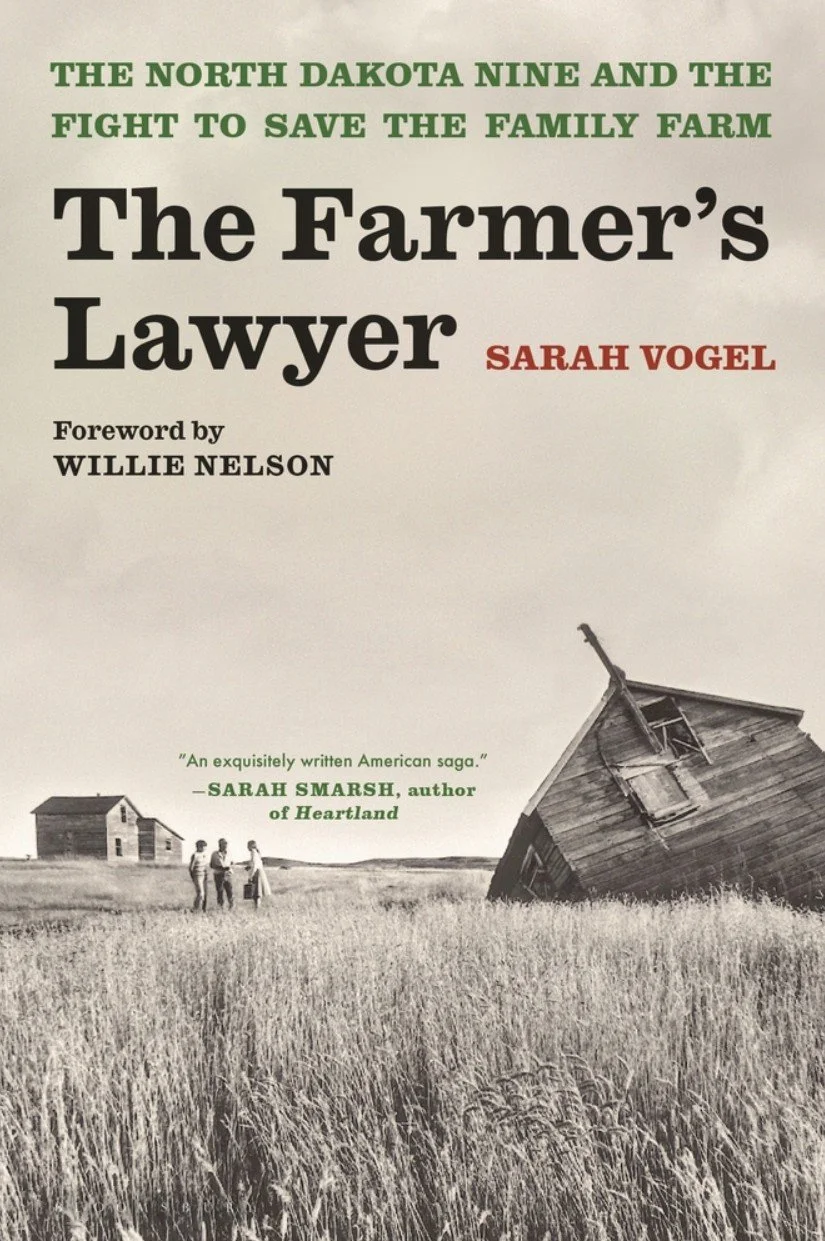
Book Review: The Farmer’s Lawyer
Sarah Vogel’s The Farmer’s Lawyer: The North Dakota Nine and the Fight to Save the Family Farm covers litigation from the farm crisis of the 1980s. Vogel begins by declaring the book to be “a memoir of a lawsuit I brought against the federal government.” In this book review, Professor Hannah Haksgaard explores how The Farmer’s Lawyer is indeed a memoir, but it is also so much more.
Everhart: Foreign Investment in American Farmland
In The Dark Side of the Balloon: Restrictions on Foreign Investment in US Farmland, Sarah Everhart (Delaware Law) argues that legislators should shift their focus from preventing foreign ownership of US farmland to supporting domestic farmers’ access to farmland.

Ume et al.: Women Smallholders Build An Agroecology Food System
In Women smallholders build an agroecology food system: the construction of empowerment and food sovereignty, Chukwuma Ume, Ernst-August Nuppenau, Stéphanie Domptail (all Agricultural Policy and Market Research, Justus-Liebig University Giessen), and Stefan Wahlen (Consumer Research, Communication and Food Sociology, Justus-Liebig University Giessen) investigate the relation between women smallholder farmers food systems and the global industrialization of agri-food systems.

Shoemaker & Tierney: Trading Acres
In Trading Acres, Jessica A. Shoemaker (Law, University of Nebraska-Lincoln) and James Fallows Tierney (Law, Illinois Institute of Technology) address the growing trend of financialization of farmland.

Schneider et al.: Financial Incentives and Landowner Interest in Reforestation
In Financial Incentives and Landowner Interest in Reforesting Open Lands in the Southeastern United States, authors Chloe Schnieder and Nina Randazzo (Environmental Defense Fund), Ram Kumar Adhikari (Forestry, Mississippi State University), and Neelam Chandra Poudyal (Natural Resources, University of Tennessee) examine the factors influencing landowners’ willingness to participate in reforestation programs.

Villavicencio-Pinto: Property Regimes and Climate Adaptation
In Beyond the Agro-export Boom: The Challenges of Land Concentration and Fragmentation in Chile, Eduardo Villavincencio-Pinto (Kent Law School, UK) examines the neoliberal rural property regime in modern Chile and its implications for how the country can meet the challenges of climate change. The author conducted a study of rural Chilean property ownership, evaluating two main trends: land concentration and land fragmentation. Employing a historical, cartographic, and socio-legal approach, Villavincencio-Pinto shows how both trends have had negative effects on the rural landscape in Chile and challenges the sustainability of this foundational system.

Cohen & Cohen: The ‘Second Amendment of Food’
In The ‘Second Amendment of Food’: Some Reflections on American Liberalism, Mathilde Cohen (Connecticut Law) and Amy Cohen (Temple Law) explore Maine’s new “right to food” amendment by considering the history of the conception of the right to food, the legislative history of the amendment, and future implications as additional states begin to grapple with similar constitutional amendments.

Ashwood et al.: Empty Fields, Empty Promises
In Empty Fields, Empty Promises: A State-by-State Guide to Understanding and Transforming the Right to Farm, Loka Ashwood (University of Kentucky, Sociology), Aimee Imlay (Mississippi State University, Sociology), Lindsay Kuehn (Farmers Legal Action Group), Allen Franco (Federal Public Defender), and Danielle Diamond (Harvard, Animal Law and Policy) use a mixed method approach to analysis and compare state right-to-farm (RTF) laws in practice.

Eminent Domain: After the Pipeline
Event video of discussion among the Rural Reconciliation Project and friends about rural futures, inspired by an upcoming premier of the Angels Theatre Company’s new play, Eminent Domain.

Earnhart & Hendricks: Adapting to Water Restrictions
In Adapting to Water Restrictions: Intensive Versus Extensive Adaptation Over Time Differentiated by Water Right Seniority, Dietrich Earnhart (Economics, University of Kansas) and Nathan P. Hendricks (Agricultural Economics, Kansas State University) explore the adaptations farmers have had to make to accommodate groundwater use restrictions.

Fairbairn & Kish: Politics of Open Data for Food and Agriculture
In Setting Data Free: The Politics of Open Data for Food and Agriculture, Madeline Fairbairn (Environmental Studies, University of California) and Zenia Kish (Media Studies, University of Tulsa), explore the assumptions and values underlying the promotion of open data in the context of food security and agricultural development. This exploration is conducted through a document-based case study of the Global Open Data for Agriculture and Nutrition (GODAN) initiative, interviews with open data practitioners, and participant observations at open data events.
Explore the Rural Review

Brief, objective summaries of new rural research across academic disciplines.

Collections of recent rural scholarship, news, and events.

Guest opinions, essays, research summaries, and other original content.

Original book reviews, creative reading lists, and further resources.

Summaries and announcements from recent programs and workshops.