Rural Democracy and Concentrated Economic Power: Workshop Reflection
This spring, the Rural Reconciliation Project convened an interdisciplinary workshop to explore how concentrated economic power shapes rural democracy: who gets to decide what, whose knowledge counts, whose labor is valued, whose ownership is visible, and whether communities are able to imagine and build a future on their own terms.
Held in Lincoln, Nebraska, this workshop brought together leading scholars from across law, sociology, history, geography, environmental studies, agriculture, labor, property, political science, and economics. Across two days, participants took up these questions through discussion of in-progress projects and more open-ended roundtable conversations.
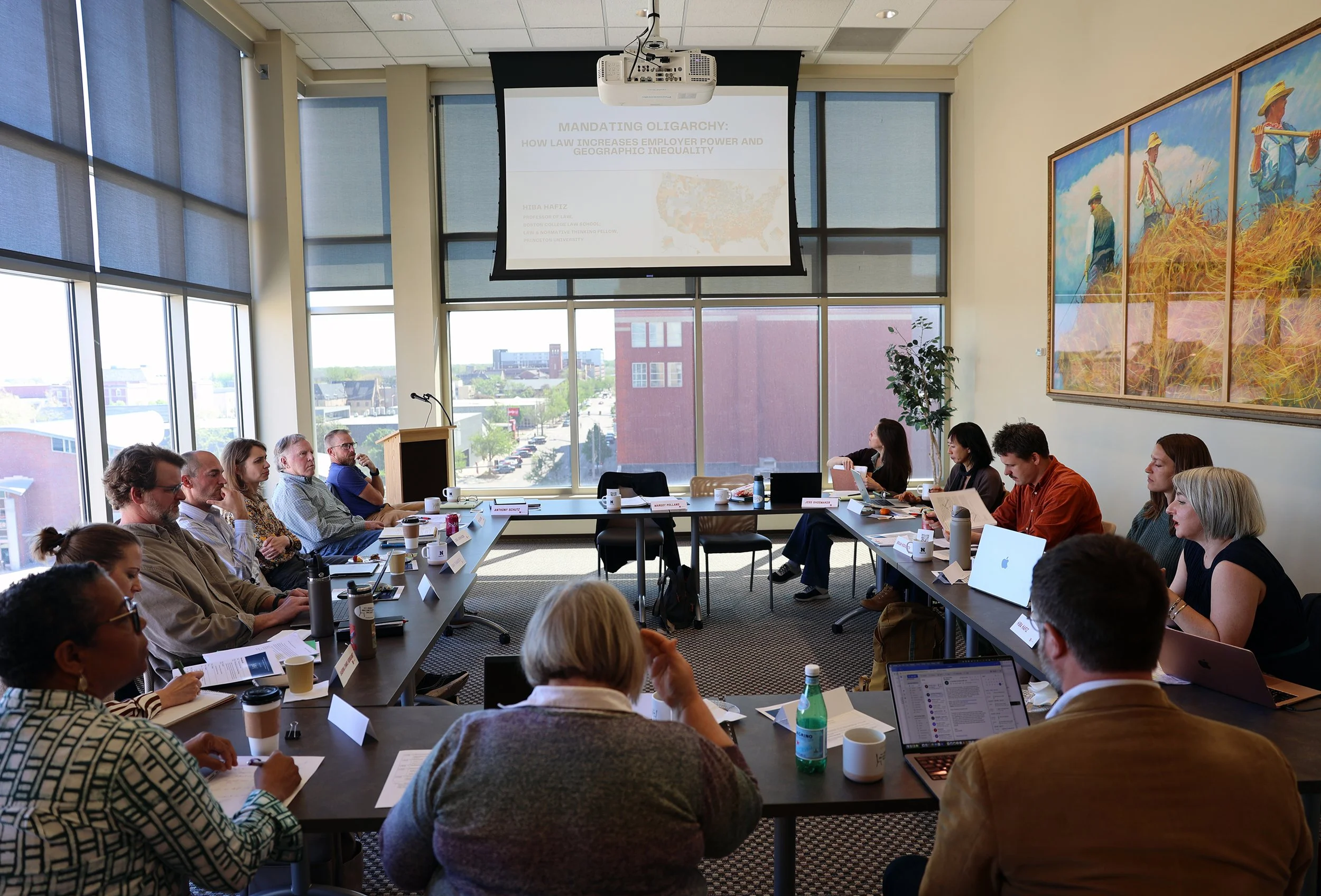
Workshop sessions were held at the Great Plains Art Museum, a part of the Center for Great Plains Studies and the University of Nebraska in Lincoln, Nebraska.
Although rural democracy is often discussed—if at all—in terms of political polarization, population loss, distrust, alienation, or economic distress, the core premise of this convening was that these dynamics do not emerge in a vacuum. They are shaped by policy choices, labor systems, property rules, corporate networks, tax law, local government authority, and the uneven distribution of political and economic power.
Thus, the resulting conversations ranged widely: from corporate farming laws and rural border counties to farmer perceptions of consolidated markets; from anti-oligarchy state constitutionalism to tax systems and the limits of decentralization; from labor geography and employer power to a specific history of economic change told through an Arkansas case study of poultry farming; from land ownership and grassroots planning to rural health, anonymous property ownership, and new methods for measuring dispossession and corporate power.
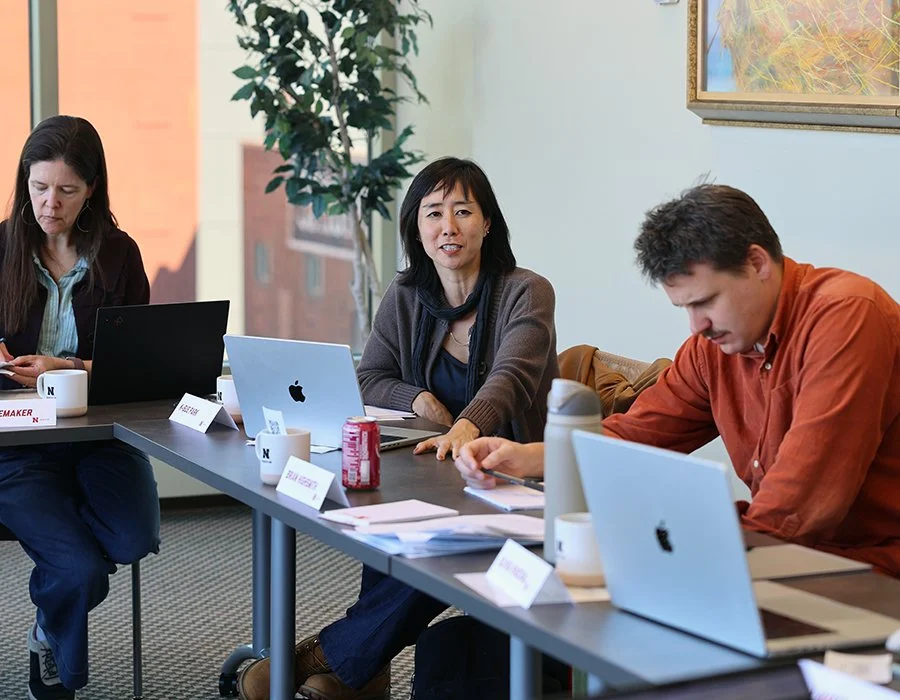
From left: Jessica Shoemaker (University of Nebraska College of Law); K-Sue Park (UCLA School of Law); Brian Highsmith (UCLA College of Law)
The workshop ultimately included the following presenters and participants:
Loka Ashwood, Professor of Community and Environmental Sociology, University of Wisconsin-Madison - Interacting with and Measuring Dispossession and Corporate Power Relationally: The ACRE Justice Initiative
Hiba Hafiz, Associate Professor and McHale Faculty Research Scholar, Boston College Law - Mandating Oligarchy: How Law Increases Employer Power and Geographic Inequality (excerpt of in-progress book)
Mary K. Hendrickson, Professor and Director, College of Agriculture, Food, and Natural Resources, University of Missouri - Markets, Trust and ‘the Government’: Farmer Perceptions and Remedies for Consolidated Markets
Brian Highsmith, Assistant Professor, UCLA School of Law - Anti-Oligarchy State Constitutions
Claude (Levi) Van Sant, Associate Professor, School of Integrative Studies, George Mason University - Land Ownership and Grassroots Planning in the Rural U.S.
K-Sue Park, Professor of Law, UCLA School of Law - Who Owns Property in America? The Rise of Anonymous Ownership and the Fall of the Registry System
Olivia Paschal, Journalist and Graduate Student (History), University of Virginia - “Something in the Water”: The Arkansas Roots of the Neoliberal Economy (excerpt of in-progress book)
Margot J. Pollans, Gilbert and Sarah Kerlin Distinguished Professor of Environmental Law, Pace University School of Law - USDA and Rural Health
Anthony Schutz, Associate Dean for Faculty & Marvin and Virgina Schmid Foundation Professor of Agricultural Law, University of Nebraska College of Law (discussant)
Jessica A. Shoemaker, Steinhart Foundation Distinguished Professor of Law, University of Nebraska College of Law - Placing Property (excerpt of in-progress book)
Sabrina Ehmke Sergeant, Managing Editor, Rural Reconciliation Project, University of Nebraska College of Law (discussant)
Adam Thimmesch, Margaret R. Larson Professor of Law, University of Nebraska College of Law - Decentralization’s Discontents
James Fallows Tierney, Associate Dean for Academic Affairs, Chicago-Kent College of Law - Rural Community and Corporate Farming Laws: Evidence from Border Counties
Steven L. Willborn, Judge Harry A. Spencer Professor of Law, University of Nebraska College of Law (discussant)
Catherine Lee Wilson, Associate Professor of Law, University of Nebraska College of Law (discussant)
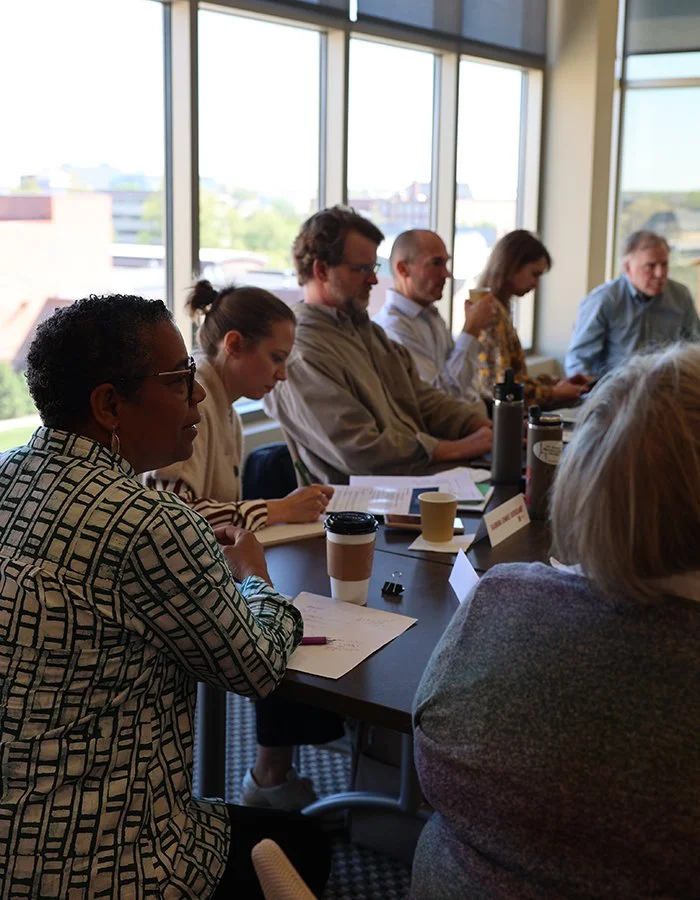
From left: Catherine Wilson (University of Nebraska College of Law); Sabrina Ehmke Sergeant (Managing Editor, Rural Reconciliation Project); Levi Van Sant (George Mason University); Adam Thimmesch (University of Nebraska College of Law); Loka Ashwood (University of Wisconsin-Madison); Steve Willborn (University of Nebraska College of Law).
Given the workshop’s interdisciplinary nature, the papers used different lenses and methodologies but addressed a common set of concerns: how power is built, hidden, justified, legalized, resisted, and sometimes reimagined in rural places.
The workshop did not purport to produce any kind of singular answer to the challenges facing rural democracy, but clear patterns emerged across the included projects: how concentrated ownership can narrow political imagination; how legal decentralization can sometimes empower local communities and sometimes intensify inequality; how rural people experience consolidated markets not only as economic pressure but as a question of trust and governance; how the opacity of property ownership can limit democratic control; and how rural histories, including histories of dispossession and disappearance, continue to shape present possibilities.
The discussions fundamentally crystalized that rural democracy is not a single subject. It is bound up with property, labor, food systems, health, environmental governance, fiscal structures, corporate organization, public administration, and memory.
After the workshop, participants emphasized not only the intellectual range of the workshop, but also the value of the space itself. As Levi Van Sant reflected, “This workshop embodied the best of academic gatherings: rigorous, creative, and constructive discussion on topics of broad public interest.” He added that the gathering made visible how even “the intricacies of tax law” and “the geography of labor markets” are essential to understanding “the concentration of economic power and its deleterious effects on democracy.”
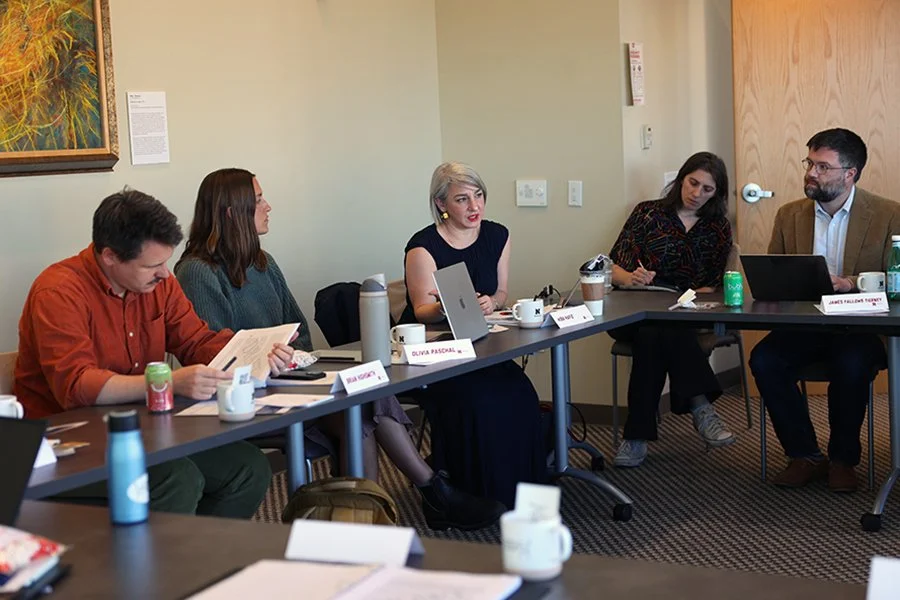
From left: Brian Highsmith (UCLA School of Law); Olivia Paschal (University of Virginia); Hiba Hafiz (Boston College); Margot Pollans (Pace University School of Law); James Fallows Tierney (Chicago-Kent College of Law)
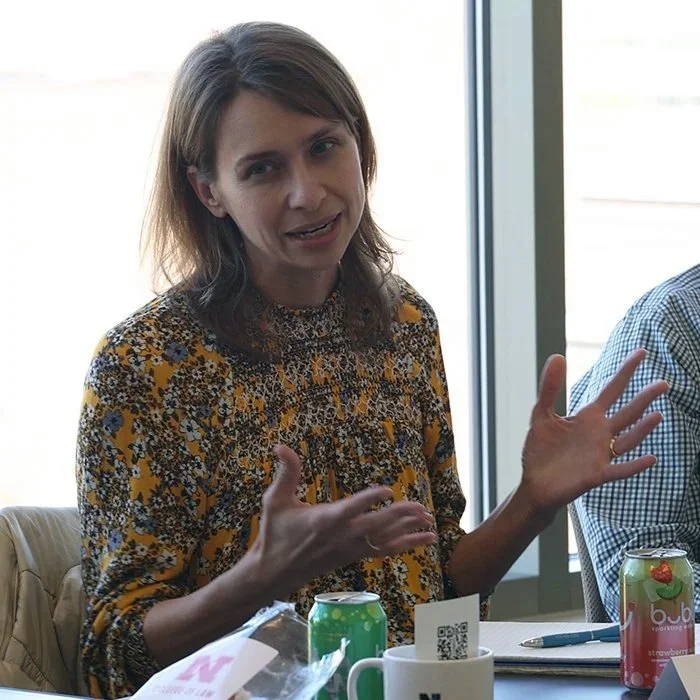
Loka Ashwood, Professor of Community and Environmental Sociology at the University of Wisconsin-Madison
Olivia Paschal similarly described the workshop as “an incredibly generous and interdisciplinary group of scholars,” noting that the papers together revealed how questions around “wealth, political representation, oligarchy, and rurality” are coalescing across disciplines and regions.
Loka Ashwood put the point more broadly, celebrating how the workshop created “a beautiful space to think deliberately with other committed rural advocates and scholars about how to do better and our best for the future.” These reflections capture the best of what the Rural Reconciliation Project hopes to make possible—a space where scholars can be serious about rural loss and rural possibility at the same time.
In the words of workshop organizer and Project director, Jessica Shoemaker: “The workshop reminded me why the Rural Reconciliation Project exists: to make space for conversations about rural places that are honest, interdisciplinary, and attentive to both harm and possibility.”
Taken together, the conversations affirmed that rural democracy cannot be separated from the material and institutional conditions of rural life. Property systems, labor markets, agricultural supply chains, public health infrastructures, land records, state constitutional designs, local governance structures, and tax systems all shape who has power in rural places. The workshop helped surface those connections and pointed toward future research and potential collaborations on rural democracy, concentrated power, and the legal structures that shape rural futures.
By the end of the workshop, participants had not resolved the tensions between concentrated power and rural democracy. But they had clarified some of the questions that might come next: What legal structures make rural power visible or invisible? What does democracy mean in rural places where ownership is concentrated, markets are consolidated, labor options are limited, public institutions are strained, and many of the most important decisions are made somewhere else? What methods can better capture rural dispossession and rural resilience? And, how might academic scholarship better contribute to more accountable, democratic, and just rural futures?
Further Acknowledgements
The Project would like to thank the Center for Great Plains Studies and the University of Nebraska College of Law for generous support in hosting these workshop events and efforts.
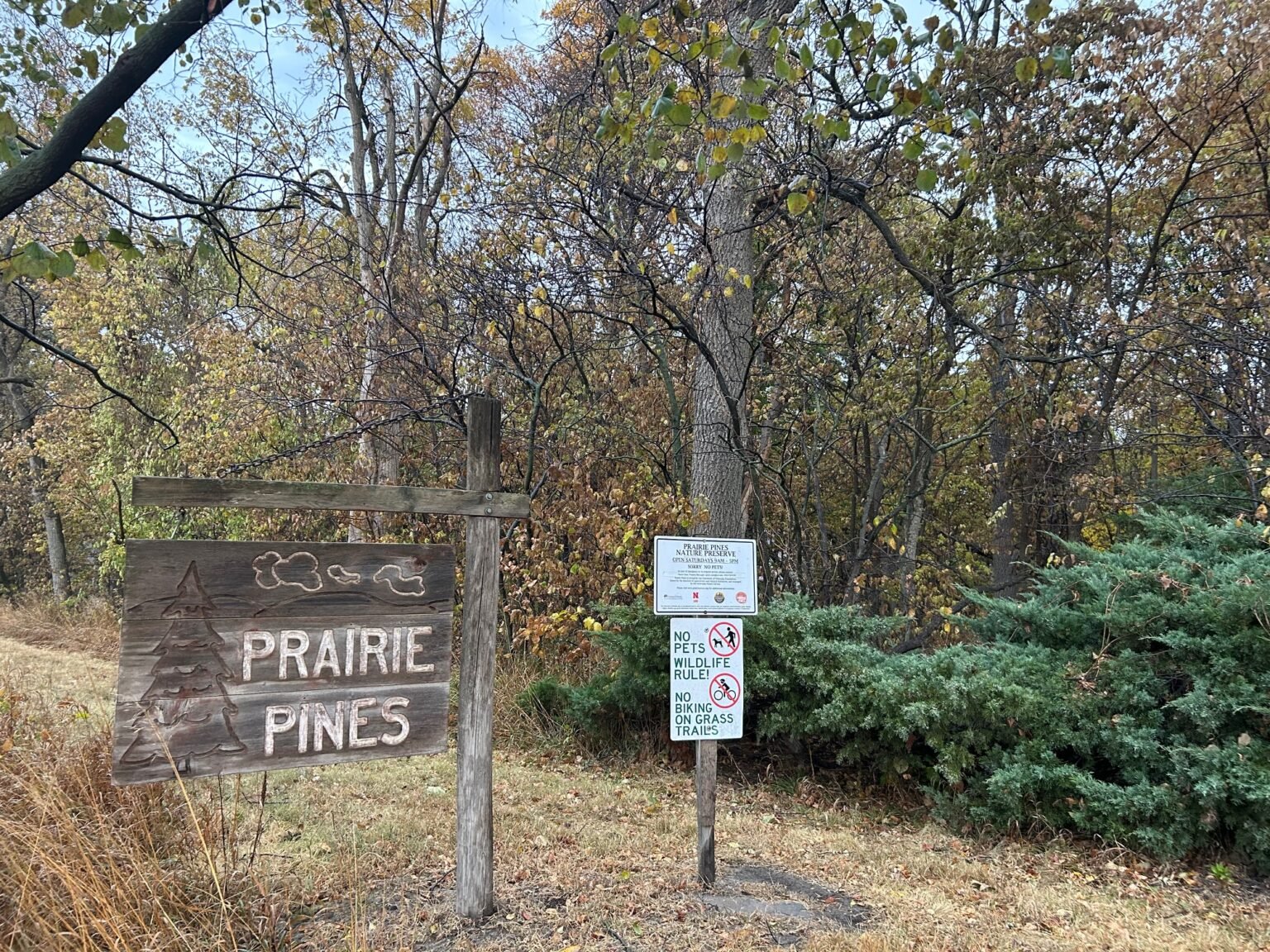
We also acknowledge that the workshop began, fittingly, on the land. Before any formal sessions commenced, a group of workshop participants visited Prairie Pines, a mixed-use nature preserve near Lincoln, Nebraska, with its own layered rural and legal history. Once connected to private landownership and a Christmas tree farm, the site now hosts conservation efforts, public space, beginning farmer incubator gardens, an Indigenous landback project, remnant prairie, and regional trail possibilities. The visit offered an embodied introduction to many of the workshop’s central questions: how land changes hands, how public and private purposes coexist, how rural futures are planned, and how law and policy organize the conditions of belonging and physical space.
It was not a formal field trip so much as a way of entering the workshop’s questions on foot: What does land hold? Who has cared for it? Who controls its future? What kinds of public, private, and collective purposes can coexist in one real place? The Project gratefully acknowledges everyone who made this tour possible.