Digests
In Property and Prejudice, Fatma Marouf and Vanessa Casado Pérez (both Texas A&M Law) examine the newest wave of state “alien land laws,” which restrict certain noncitizens and foreign entities from owning real property in the United States.

In On the Production of Climate-related Loss: Land Dispossession, Indebtedness, and Climate Change in Northeastern Cambodia, Kelly Dorkenoo (Centre for Sustainability Studies, Lund University, Sweden) and Phasy Res (Development Studies, Paris 1 Panthéon-Sorbonne University) explore how development policies reinforce social and economic inequalities that shape climate-related land loss in rural and Indigenous farming communities.
In The Rural Rescue: Tackling Arkansas’s Legal Deserts Through Proven Statutory Reform, Kathryn Totty (University of Arkansas School of Law), examines how successful frameworks for rural recruitment programs in other fields and states can be applied to reduce the rural legal desert crisis in Arkansas communities.
In America’s Empty Homes: The Overlooked Rural and Nonmetropolitan Housing Vacancy Problem, Gregory M. Fulkerson and Alex R. Thomas (both PLACES Institute, SUNY Oneonta) examine housing vacancy across rural and nonmetropolitan areas of the United States. They focus on patterns of “structural housing vacancy,” meaning vacant housing units excluding those designated for seasonal, recreational, or occasional use. The study uses various factors like socioeconomic conditions, demographic characteristics, rurality and remoteness, and regional contexts to advance a more geographically nuanced understanding of housing vacancy in the US.

In Taxation, Redistribution, and the Urban-Rural Divide, author Kirk J. Stark (UCLA School of Law) considers how population density in urban and rural areas influences subnational and nation tax policies in the United States. The author claims that the urban-rural divide promotes more redistributive tax policies at the subnational level, while pushing the national government towards less redistributive tax policies.

In Community Lawyering in Coal Country: Empowering Those Who Power America, Gregory Robertson (West Virginia Law) examines how social institutions have failed coal miners by systematically discouraging attorneys and advocates from representing coal miners in Black Lung benefits claims, and how four attorneys have modeled success despite these challenges by drawing on the principles and strategies of community lawyering.

In Preserving Rural School Districts from the Threat of Vouchers and Charters, Preston C. Green III (Urban Education and Educational Leadership and Law, University of Connecticut), Bruce D. Backer (Teaching and Learning, University of Miami), Christopher M. Saldana and Julie F. Mead (both Education, University of Wisconsin-Madison) discuss how voucher and charter school programs are having an unintended negative impact on rural school districts and communities. The authors suggest that state legislatures take action to fulfill their constitutional obligation to ensure public access to education by creating “education preserves.”

In Empowering the Energy Transition in Rural Electric Cooperatives, Katrina Smith (Carolina Law), outlines the shortcomings of rural electric cooperatives and how they have transformed from their original design to what they are today. Smith considers various pathways for reform to empower rural communities, including how tax status can be leveraged as a new method of reform.

In Rural Legal Markets, Elizabeth Chambliss (University of South Carolina School of Law) explores the realities of the current legal market of private practice in rural South Carolina. Using a mixed-methods study of private practitioners, Chambliss examines the economic and professional structures that shape rural legal markets, identifies the ingredients of sustainable rural practice, and discusses incentives for rural practitioners to engage in pro bono and low-bono services.

In A Tale of Two Landlords, Christopher J. Ryan Jr. (Maurer School of Law) explores the use of legal eviction from the landlord’s perspective, focusing on how costs impact landlords’ behaviors in the formal legal process of eviction. Drawing on over 200,000 eviction cases in Kentucky, the study explores the “economy of eviction,” and finds clear differences between landlords based on their location (rural or urban) and scale of their operations (small or large) when attempting to recoup lost rent or go through the eviction process.

In Forgotten are the Locals: Structures of Common Differences and the Inauthentic Curation of Western Boom Town Main Streetscapes, author Matthew M. Mars (Public and Applied Humanities, University of Arizona) examines four rural Arizona “main street” streetscapes to better understand these structures function as inauthentic representations of everyday rural life.

In Protecting Access to Nursing Home Care for Family Farmers, Natalie Temple (Gonzaga Law School) explores the challenges faced by American farmers facing retirement age and the need for care in nursing home facilities. Due to the “land rich, cash poor” nature of most farmers, elderly care poses a choice for most farmers between selling off farmland or going without care.
In Rural Residency, Rural Resentment, and Attitudes Towards Public Land Management in the United States, authors B. Kal Munis and Zoe Nemerever (both Political Science, Auburn) explore attitudes regarding federal public land management along the urban-rural divide. The authors find that while both rural and non-rural Americans are broadly supportive of federal public lands, a subset of “resentful ruralities” are markedly unsupportive of public lands due to their opposition to the federal government.

In Justice on the Backroads: The TBA YLD’s Answer to the Rural Attorney Shortage, Hon. Zachary R. Walden (Criminal Court judge for Tennessee’s 8th Judicial District) and Alix Rogers (Belmont University College of Law) explore the impact of the Tennessee Bar Association Young Lawyer Division’s Rural Judicial Fellowship (RJF) on law students from schools across the state. Built in response to Tennessee’s growing “legal deserts”—areas in which the availability of legal services is diminishing—the RJF program places law students in clerkships with rural judges during the summer to introduce them to career opportunities in rural areas.

In Collaborative Management on the Eastern Slopes: The Waldron Ranch Grazing Cooperative and Conservation Easement Motivations, Forrest Hisey (Geography, Geomatics, and Environment, University of Toronto Mississauga) and Jonah Olsen (Geography and Planning, University of Toronto) investigate the use of conservation easements (CEs) in Canada as a tool for private land conservation. The authors explore the intrinsic and extrinsic motivations for such easements, including deeply rooted cultural identities among landowners and traditional economic benefits.

In Understanding Rural Legal Deserts to Inform Public Policy: Identifying and Describing Lawyer Gaps in Non-Metropolitan Counties, David J. Peters, Emma Bartling, and Emily Meyer (all Agricultural and Rural Policy, Iowa State University) analyze the current trends of lawyer shortages in rural “legal deserts,” areas lacking sufficient legal services, across the United States. In doing so, the authors put forth an alternative calculation and classification of legal deserts that differs from that of the American Bar Association.

In The Healing Power of Antitrust, Theodosia Stavroulaki (Saint Louis University School of Law) analyzes the effects of noncompete and merger agreements between rural hospitals, which lead to “hospital deserts,” areas where geographic access to hospitals and primary care physicians is lacking. These areas leave millions of Americans without necessary medical care, further exacerbating health and racial disparities that leave rural populations particularly vulnerable.
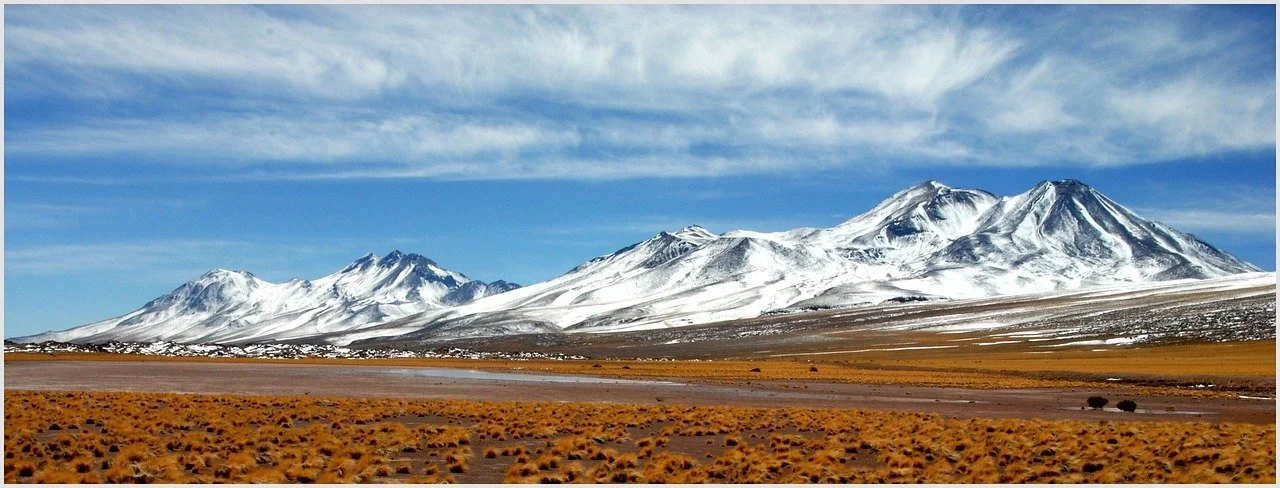
In The Geography of Property Rights: Land Concentration, Irrigation Access and Rural Poverty Under Climate Change in Chile, Eduardo Villavicencio-Pinto (Law, University of Kent, England) examines the relationship between land concentration and rural poverty in Chile. The article argues that land concentration increases the likelihood of poverty primarily in communities with limited water access.

In Feed it to the Ocean: The Federal Approach to Decommissioning in Alaska Native Climate Adaptation Project, Sophia Tidler (University of Hawaiʻi at Mānoa Law) highlights the importance of decommissioning existing infrastructure when planning relocation, managed retreat, and protect-in-place (RMP) projects for environmentally threatened Native communities in rural Alaska.

In Catching Nutrients in a Net: Collective Action, Institutional Impediments, and the Mississippi River Watershed, Jonathan Rosenbloom (Albany Law School) investigates the role of local governments in the regulation of pollution in the Mississippi River Watershed. In his analysis, Rosenbloom goes beyond the traditional “tragedy of the commons” explanation for local government action and instead looks to the dynamics of federal and state regulations that preempt local governments.

In Know Your Rights! A Field Experiment on Legal Knowledge, Property Rights, and Investment in Kenya, Adam Aberra and Matthieu Chemin (both Economics, McGill University, Montreal) illustrate the impact of legal trainings regarding property rights on landowners in Kenya and emphasize that this low-cost intervention increases security in property rights and promotes economic development.
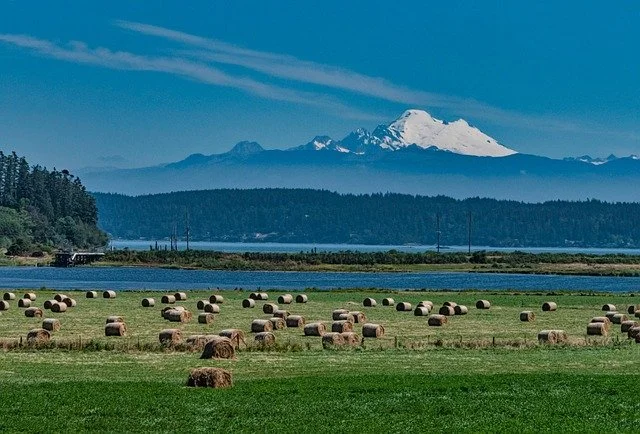
In Legal Deserts and Spatial Injustice: A Study of Criminal Legal Systems in Rural Washington, authors Lisa R. Pruitt (University of California Davis Law), Jennifer Sherman, and Jennifer Schwartz (both Sociology, Washington State) delve into the criminal legal systems across several rural counties in eastern Washington to understand the problems these communities face and how those problems impact legal representation for indigent defendants.

In A World-Threatening Feeling: Grief, Moral Injury, and Institutional Loss in Rural Courts, author Michele Statz (Minnesota Medical School and Minnesota Law) examines how technologies first implemented during the COVID-19 pandemic continue to reshape rural judicial systems. Statz argues these tools contribute to a loss of connection between rural judges, attorneys, court staff, and parties which further undermines the sense of purpose many rural practitioners once felt in their work.

In Rural Geography I: Why Should Rural Geographers ‘Care’?Susanne Stenbacka (Human Geography, Uppsala University, Sweden) explores the existing literature discussing the concept of care and its intersection with rural geography. Stenbacka encourages rural geographers to incorporate care theory into their research, arguing that care can be used both as a tool and a lens through which to view the challenges faced by rural spaces.

In Natural Resource Policy and Collaborative Processes, Crystal M. Callahan and Katherine M. Himes (both Public Policy Research, University of Idaho) advocate for introducing collaborative governance to the natural resource policy process. The authors explore several successful Idaho case studies in which collective governance was utilized to address “wicked problems” plaguing Idaho’s natural resource policy.

In The Dark Side of the Balloon: Restrictions on Foreign Investment in US Farmland, Sarah Everhart (Delaware Law) argues that legislators should shift their focus from preventing foreign ownership of US farmland to supporting domestic farmers’ access to farmland.

In Rural Politics in the United States, authors Trevor E. Brown and Suzanne Mettler (both Government, Cornell University) survey recent literature on rural politics and recommend a broader lens to better understand the impact of place on voters. They discuss the current state of rural politics literature, how to measure place and rurality, the role of public opinion, and recommend a comparative approach for future rural studies.

In Women smallholders build an agroecology food system: the construction of empowerment and food sovereignty, Chukwuma Ume, Ernst-August Nuppenau, Stéphanie Domptail (all Agricultural Policy and Market Research, Justus-Liebig University Giessen), and Stefan Wahlen (Consumer Research, Communication and Food Sociology, Justus-Liebig University Giessen) investigate the relation between women smallholder farmers food systems and the global industrialization of agri-food systems.

In Provincial Diffusion, National Acceptance: The Transfer of Conservation Easement Policy in Canada, author Forrest Hisey (Geography, Geomatics, and Environment, University of Toronto) surveys the development of conservation easement (CE) legislation development in Canada to understand the state of CE policy as well as policy diffusion methods leading to this development.

In Neo-Rurals and Tourism in the Context of Rural Crisis in Southern Europe. Case Study in the Sierra de Aracena (Andalusia, Spain), authors José Manuel Álvarez-Montoya and Esteban Ruiz-Ballesteros (both Social Anthropology, Psychology and Public Health, Universidad Pablo de Olavide, Spain) explore the influence of neo-rurals and tourism on a rural Spanish community to highlight how an influx of newcomers can benefit rural areas.