Book Review and Commentary by Grace Tracey, a 2026 graduate of the University of Nebraska College of Law.
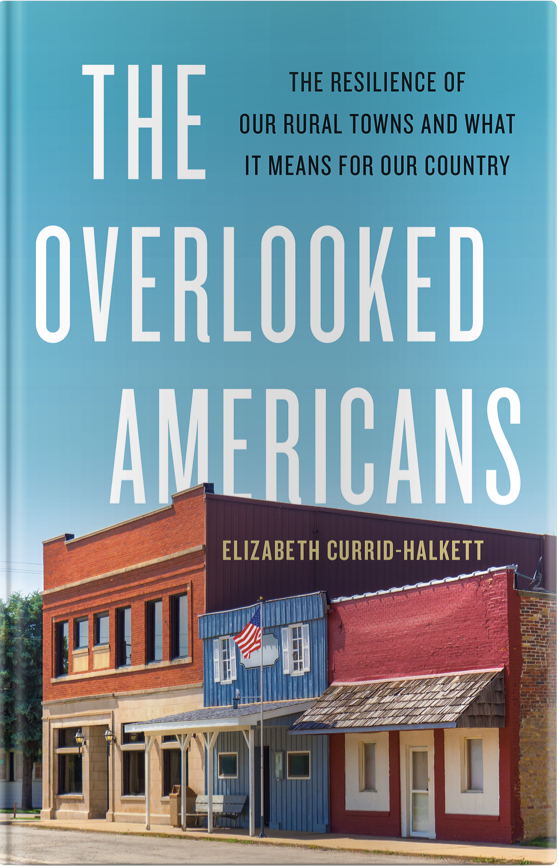
Grace Tracey shares this review of Elizabeth Currid-Halkett’s The Overlooked Americans: The Resilience of Our Rural Towns and What it Means For Our Country (Basic Books, 2023)
Having grown up in rural Iowa, I am aware of the stereotypes outsiders often hold about rural communities: rural people are uneducated, conservative, and isolated. Rural communities are in economic decline and angry. My experiences, however, do not align with this narrative.
The town I grew up in was thriving economically. Our local schools boasted of above average standardized testing scores, and many graduates would continue their education with post-secondary schooling. In addition, not everyone subscribed to the same political party and very few people were angry.
Elizabeth Currid-Halkett’s The Overlooked Americans: The Resilience of Our Rural Towns and What It Means For Our Country challenges popular rural narratives of crisis. Having grown up in Danville, Pennsylvania, Currid-Halkett knew, like I did, that this depiction of rural America is inaccurate. Rural communities, and discourse surrounding these communities, is not one size fits all. To accommodate the complexity of rural communities, and more importantly the people of these communities, The Overlooked Americans takes a personalized approach—through interviews with rural individuals across the country—to discovering rural America.
Currid-Halkett blends qualitative and quantitative data to create a complex but accurate portrayal of rural America. Most of the qualitative data is derived from interviews with urban and rural individuals conducted during the COVID-19 pandemic on key social, cultural, and political issues. Common interview topics included religion, democracy, affirmative action, and same-sex marriage. Each inquiry into the realities of rural America begins with a story drawn from conversations Currid-Halkett had with her interviewees. For example, her examination of higher education in rural America begins with conversations with a friend’s daughter about the college admission process. These conversations with rural individuals demonstrate the multitudes of rurality—ultimately, there is no single definition of rural America. Instead, just like their urban counterparts, rural communities are unique. After establishing the complexity of and humanity behind the rural issue, Currid-Halkett dives into data.
Unlike the media’s depictions of a bleak rural future, Currid-Halkett paints a more positive picture of rurality. Department of Labor and US census data show that urban and rural communities are similar–economic development, homeownership, and vaccination rates do not significantly differ across most rural and urban communities. Rural America is doing well in most quantitative measures. Unemployment in rural communities is lower than urban counterparts, homeownership is higher, and median income is on par.
Part of this disparity in data and actual outcomes derives from popular rural discourse in media focused on one specific region–Appalachia. One example is JD Vance’s 2016 book, Hillbilly Elegy: A Memoir of a Family and Culture in Crisis. While this region is important, this singular focus has conflated the specific problems of the Appalachian region with the rest of rural America.
For example, the opioid epidemic is not a story of most rural communities. In West Virginia, the rate of opioid overdose deaths in 2022 was 81.2 people per 100,000. By contrast, the rate in Iowa was 14.3 people per 100,000. Though media has used the Appalachian region as the default setting of rural America, Appalachia is an outlier in rural America, certainly not a normal experience.
Currid-Halkett also found that rural America is less prejudiced, more diverse, and more apolitical than commonly depicted. Interviewee responses suggest most Americans agree on key issues regardless of whether they lived in rural and urban communities. This is not to say that there are no people in rural America who are prejudiced. There are. However, this is not unique to rural America; prejudiced individuals can be found in cities as well. Currid-Halkett notes rural communities do have less mobility, but not necessarily due to a lack of choice. Many rural students do not complete post-secondary education, and those that choose to often continue in state or local colleges. Currid-Halkett attributes this, in part, to distinct cultural capital and societal norms. Rural Americans focus less on credentials than their urban counterparts. In addition, rural students tend to be more tied to their community, with family members living nearby.
Ultimately, The Overlooked Americans serves as a reminder that rurality is multifaceted. Moving past the bleak caricatures rural residents often see of themselves, Currid-Halkett does not just defend rural America, but provides a picture of a more unified national identity. For those of us who grew up in these thriving rural pockets, the book feels less like a discovery and more like a validation of the homes we actually know.
Explore more book reviews and book-centered conversations in our new Books section.